Why Electrical Safety Should Be a Priority
Electrical safety is a critical aspect of maintaining both residential and commercial properties. Faulty wiring, outdated systems, and improper electrical practices can lead to serious hazards, including fires, electric shocks, and power outages. Whether you’re a homeowner or manage a commercial building, understanding and implementing proper electrical safety measures can save lives and prevent costly damage.
What Are the Common Electrical Hazards?
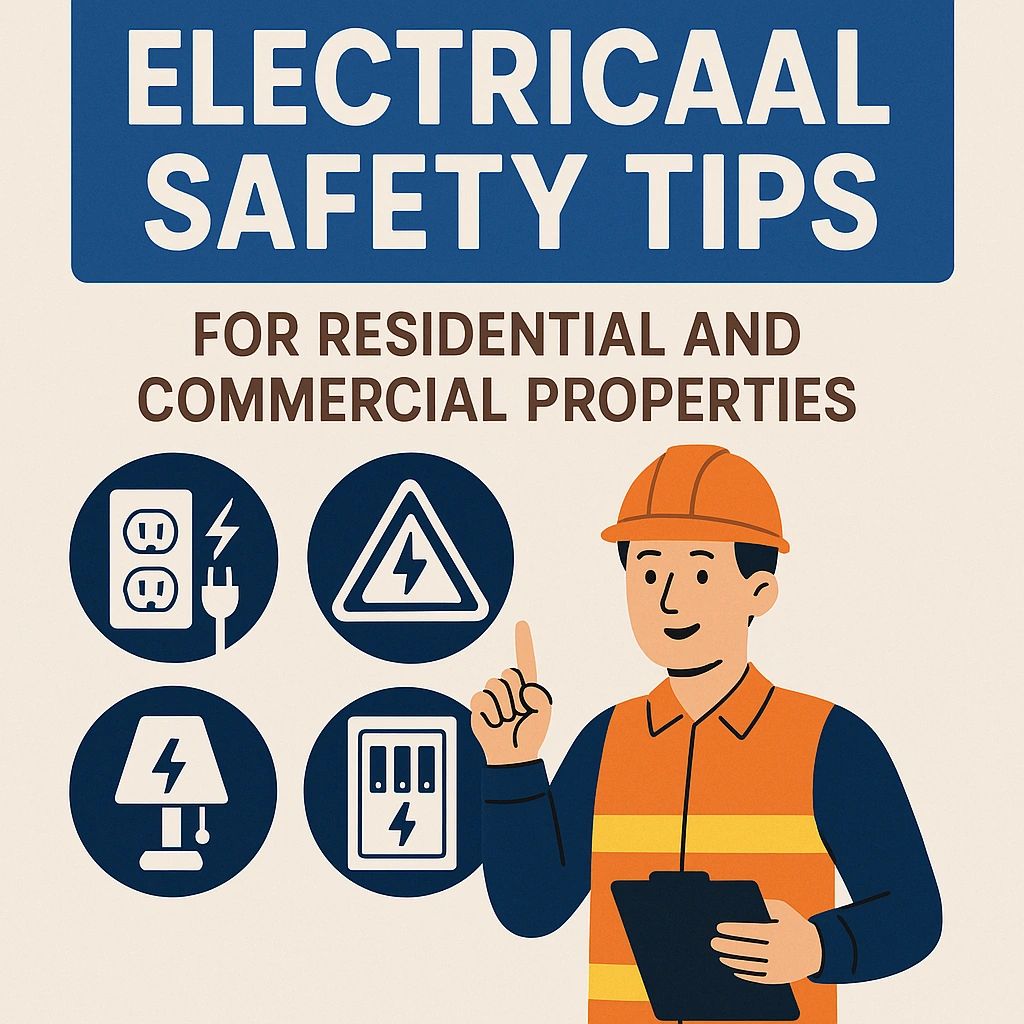
Before diving into safety tips, it’s essential to understand the most common electrical hazards that pose risks in homes and businesses:
- Overloaded Circuits: Plugging too many devices into one outlet can cause overheating.
- Exposed Wiring: Damaged or frayed wires are a significant safety risk.
- Improper Grounding: Electrical systems that are not properly grounded can lead to equipment damage and safety hazards.
- Water and Electricity: Outlets and electrical equipment near water sources increase the risk of electric shock.
- Old Electrical Systems: Outdated wiring and panels may not be able to handle modern electrical loads.
Top Electrical Safety Tips
1. Schedule Regular Inspections
One of the most effective ways to ensure electrical safety is by scheduling regular inspections with a licensed electrician. Inspections can identify issues like outdated wiring, overloaded circuits, and potential fire hazards. For commercial properties, these inspections are often required by law.
2. Use Ground Fault Circuit Interrupters (GFCIs)
GFCIs are a must-have for areas where water and electricity may come into contact, such as kitchens, bathrooms, and outdoor spaces. These devices quickly shut off power if they detect a ground fault, preventing electric shocks.
3. Avoid Overloading Outlets
Avoid plugging multiple high-wattage devices into a single outlet. Use power strips with surge protectors and distribute your electrical load across multiple outlets to minimize risks.
4. Replace Damaged Cords and Wires
Frayed or cracked cords should be replaced immediately. Damaged wires can cause sparks and increase the risk of electrical fires.
5. Install Smoke Detectors and Fire Extinguishers
Ensure your property is equipped with functional smoke detectors and fire extinguishers. Regularly test these devices and replace batteries as needed.
6. Upgrade Old Electrical Systems
Older properties often have outdated electrical systems that are not equipped to handle today’s energy demands. Upgrading your system can improve safety and efficiency, as well as increase property value.
7. Educate Your Family or Employees
Everyone should know basic electrical safety practices. For example, never touch electrical appliances with wet hands, and always unplug devices before cleaning them.
8. Label Circuit Breakers
Clearly labeling your circuit breaker panel helps you quickly identify and resolve electrical issues. This is particularly useful in emergencies.
How to Handle Electrical Emergencies
Despite taking all precautions, electrical emergencies can still occur. Here’s what to do in case of an emergency:
- Turn Off Power: Shut off the main power supply immediately if you detect smoke, sparks, or a burning smell.
- Use a Fire Extinguisher: If an electrical fire breaks out, use a Class C fire extinguisher. Never use water on electrical fires.
- Call a Licensed Electrician: For any significant issues, always contact a professional to handle repairs safely.
- Evacuate if Necessary: In case of severe electrical hazards, evacuate the area and call emergency services.
Benefits of Hiring a Professional Electrician
While some electrical tasks may seem simple, it’s always safer and more effective to hire a licensed electrician for your needs. Professionals bring expertise, proper tools, and compliance with local codes and regulations. Hiring an expert can:
- Ensure Safety: Proper installation and repairs reduce the risks of an accident.
- Save Money: Prevent costly mistakes and reduce energy bills with efficient systems.
- Provide Peace of Mind: Knowing that your electrical system is in good hands offers invaluable peace of mind.
FAQs About Electrical Safety
1. How often should I have my electrical system inspected?
It’s recommended to schedule an inspection at least once every three to five years for residential properties and annually for commercial buildings.
2. Can I perform electrical repairs myself?
While minor tasks like replacing a light bulb are safe, most electrical repairs should be handled by a licensed electrician to ensure compliance and safety.
3. What are the signs of an overloaded circuit?
Flickering lights, tripped breakers, and warm outlets are common indicators of an overloaded circuit.
Read more here.
4. Are surge protectors necessary?
Yes, surge protectors safeguard your devices from voltage spikes and can prevent equipment damage.
Read more here.
5. What should I do if I smell burning from an outlet?
Turn off the power supply immediately and contact a licensed electrician to assess and repair the issue.
Our Service Area
At Take Charge Electric, we’re proud to provide trusted residential and commercial electrical services throughout the Key Peninsula, Gig Harbor, Belfair, Poulsbo, Bremerton, Port Orchard, Tacoma, and the surrounding communities in Northwestern Washington. Whether you’re in a quiet neighborhood, a bustling business district, or a rural property, our licensed electricians are here to deliver safe, reliable, and code-compliant solutions tailored to your needs. We understand the unique challenges our region faces—especially when it comes to storm season—and we’re committed to keeping your home or business powered and protected year-round.
Conclusion
Electrical safety is a responsibility that should never be taken lightly. By following these tips and understanding the potential hazards, you can create a safer environment for your family, employees, or tenants. Regular maintenance, proper equipment, and professional guidance are key to ensuring your electrical systems operate safely and efficiently.
Ready to Make Safety a Priority?
Don’t wait until an electrical issue becomes an emergency. Contact Take Charge Electric today to schedule an inspection, request a quote, or discuss your next project. Call or text us at 253-900-9798. We’re here to help keep your property safe and powered with confidence.

Owner/CEO