Buying an electric vehicle is exciting! You get to skip the gas station, enjoy a quieter ride, and charge your vehicle right at home. But figuring out which charger you need can bring up a few questions.
Can you use the same charger for a Tesla and a Ford? Do you need special wiring? Will your electrical panel handle the extra demand?
The good news is that choosing a home EV charger doesn’t have to be complicated. Once you know a few things about your vehicle and your home’s electrical system, the options become much clearer.
At Take Charge Electric, we help homeowners in Gig Harbor find safe, reliable charging solutions that fit their vehicles, homes, and everyday routines.
What Should You Know Before Choosing a Home EV Charger?
Not every electric vehicle charges the same way, and the charger that works best for your neighbor might not be the right one for you.
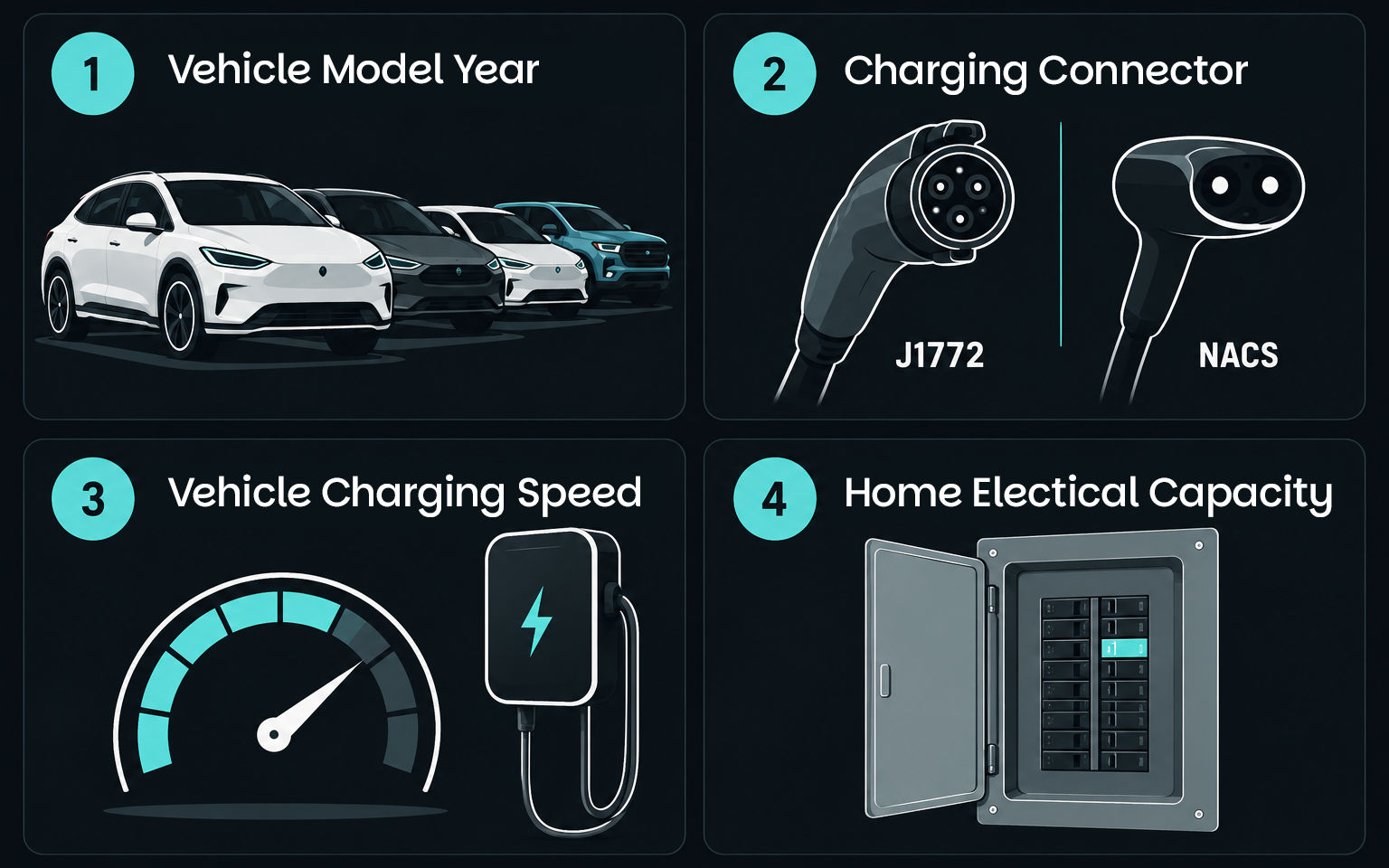
There are four main things to consider.
Your vehicle’s model year: Automakers have been changing the charging connections on newer electric vehicles. A charger that plugs directly into one model may require an adapter for another.
Your charging connector: Most electric vehicles in North America use either a J1772 connector or the newer North American Charging Standard (NACS), commonly associated with Tesla.
Your vehicle’s charging speed: Every EV has a limit on how much AC charging power it can accept. Installing a more powerful charger won’t necessarily make your vehicle charge faster.
Your home’s electrical capacity: Your electrical panel needs enough available capacity to support the additional electrical demand. Sometimes that’s straightforward. Other times, a little planning or an electrical upgrade is needed.
Understanding these details helps you choose a home EV charger that works well today and makes sense for the future.
Level 1 vs. Level 2 EV Chargers: What’s the Difference?
Before choosing a particular brand, it helps to understand the two main ways to charge an electric vehicle at home.
Level 1 Charging: Plugging Into a Standard Outlet
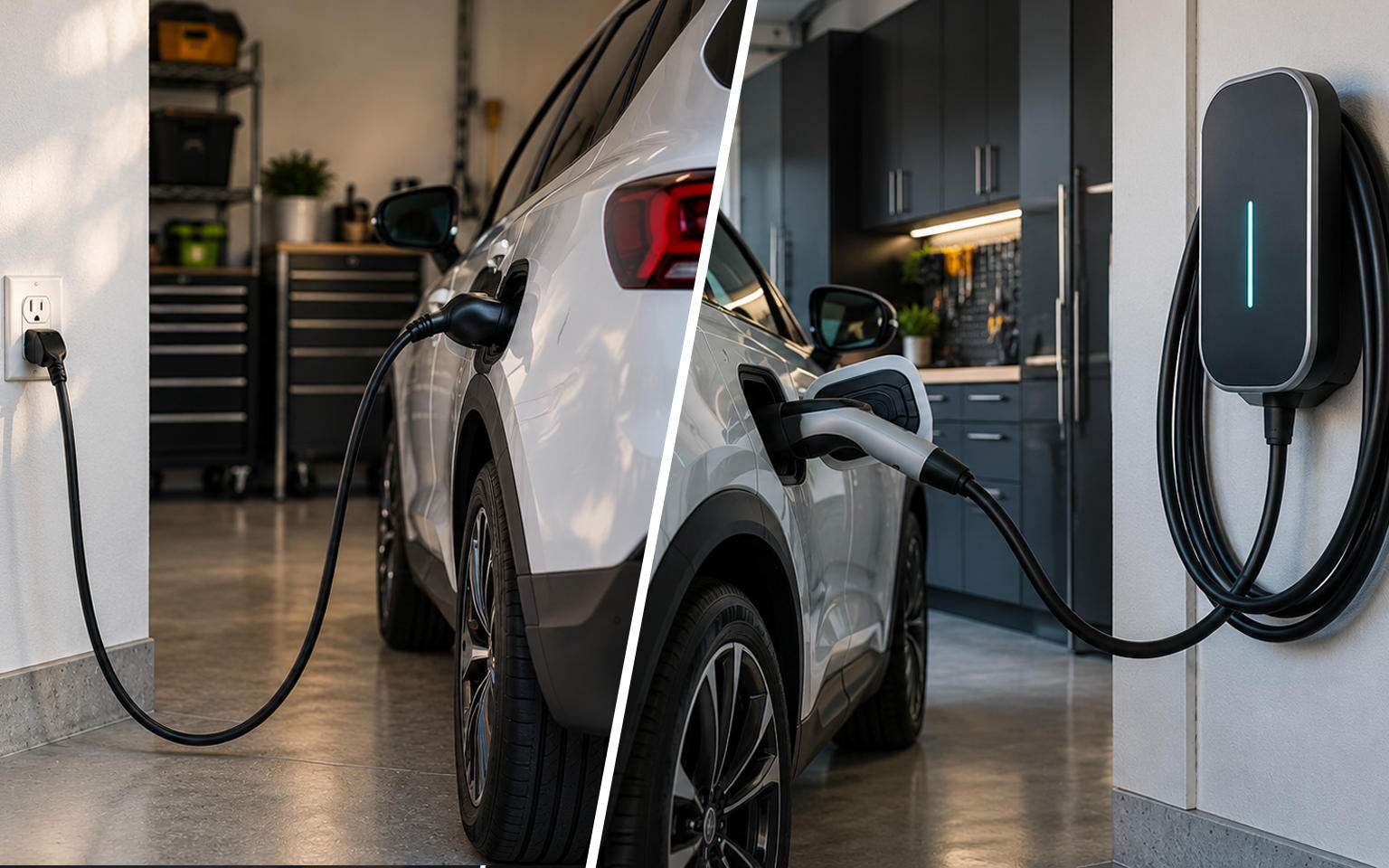
Level 1 charging uses a standard 120-volt household outlet and a compatible charging cable.
It’s the slowest charging option, often adding only a few miles of driving range per hour. However, it can work well for people who drive shorter distances and have plenty of time to recharge overnight.
You’ll also want to make sure the outlet and circuit are suitable for continuous EV charging.
Level 2 Charging: Faster, More Convenient Home Charging
A Level 2 EV charger uses a 240-volt electrical connection, similar to what larger household appliances use.
Depending on your vehicle and electrical setup, Level 2 charging can add roughly 10 to 40 miles of range per hour.
For many households, that means plugging in when you get home and waking up to a vehicle that’s ready for the day.
A professionally installed Level 2 charger is often the most practical choice for homeowners who drive regularly. The U.S. Department of Energy’s Alternative Fuels Data Center also provides helpful information about charging equipment and charging speeds.
Which Home EV Charger Works With Your Vehicle?
One of the most common questions we hear is whether a particular electric vehicle needs its own brand of charger.
In many cases, it doesn’t!
There are plenty of reliable charging options that work across different vehicle brands. The important part is matching the charger, connector, and vehicle specifications.

Tesla Home Charger Options
Tesla vehicles use the NACS charging connector, and the Tesla Wall Connector is a popular home charging option.
Tesla also offers a Universal Wall Connector designed to accommodate both NACS and J1772-equipped vehicles.
That makes it worth considering if your household has more than one electric vehicle or you might switch brands in the future.
Chevrolet EV Charger Options
Chevrolet electric vehicles, including the Bolt, Equinox EV, and Blazer EV, have used different charging connections depending on their model year.
Many Chevrolet EVs use J1772 for Level 2 charging, while newer models are transitioning toward NACS.
A compatible universal home EV charger can be a practical option, especially when paired with the appropriate connector or approved adapter.

Ford EV Charger Options
Ford electric vehicles, including the Mustang Mach-E and F-150 Lightning, can be charged at home using compatible Level 2 equipment.
Ford has offered its own charging equipment, but a Ford-branded charger isn’t your only option.
Connector requirements depend on the model year. Some Ford EVs use J1772 for AC charging, while newer models are moving toward NACS.
For F-150 Lightning owners, certain home backup power features require additional compatible equipment beyond a standard charger.

Kia and Hyundai EV Charger Options
Electric vehicles such as the Kia EV6, Kia EV9, Hyundai IONIQ 5, and Hyundai IONIQ 6 are designed for convenient home charging.
Earlier models commonly use J1772 connections, while newer vehicles may have NACS ports.
A compatible Level 2 EV charger can make daily charging much easier, particularly for households with longer commutes.

Nissan EV Charger Options
The Nissan LEAF and Nissan ARIYA have different charging specifications, and connector types vary across models and model years.
Many Nissan vehicles use J1772 for Level 2 home charging, while newer models are adopting NACS.
Some LEAF models also use CHAdeMO for DC fast charging. That’s a separate connection from the one used for everyday Level 2 charging.
Checking your specific Nissan model helps avoid purchasing equipment that doesn’t fit.

Rivian Wall Charger Options
Rivian R1T and R1S owners can choose from Rivian-branded charging equipment and compatible third-party chargers.
The Rivian wall charger is designed for convenient home charging, but it’s not the only solution.
As Rivian transitions to NACS connections on newer vehicles, choosing equipment that matches your model year becomes especially important.

Toyota and BMW EV Charger Options
Toyota electric vehicles, including the bZ4X and newer bZ models, can use compatible Level 2 home charging equipment.
BMW electric vehicles, including the i4, i5, and iX, also support Level 2 charging.
Both manufacturers have offered vehicles with J1772 connections, while charging standards continue to evolve.
You don’t necessarily need a Toyota or BMW-branded charger. The right connector, charging capacity, and installation matter more than the logo on the equipment.
Hardwired vs. Plug-In EV Chargers: Which Is Better?
Once you’ve chosen your charging equipment, you’ll need to decide how it connects to your home’s electrical system.
A plug-in charger uses a suitable 240-volt outlet. This can offer flexibility if you want to move the charging equipment later. However, the outlet, wiring, and circuit must be properly rated for EV charging.
A hardwired charger connects directly to a dedicated electrical circuit. It eliminates the need for a receptacle and can support higher charging capacities when the equipment and electrical system allow.
Both options can be safe and reliable when installed correctly. We’ll help you understand which approach makes the most sense for your home.
Will You Need an Electrical Panel Upgrade?
Not necessarily!
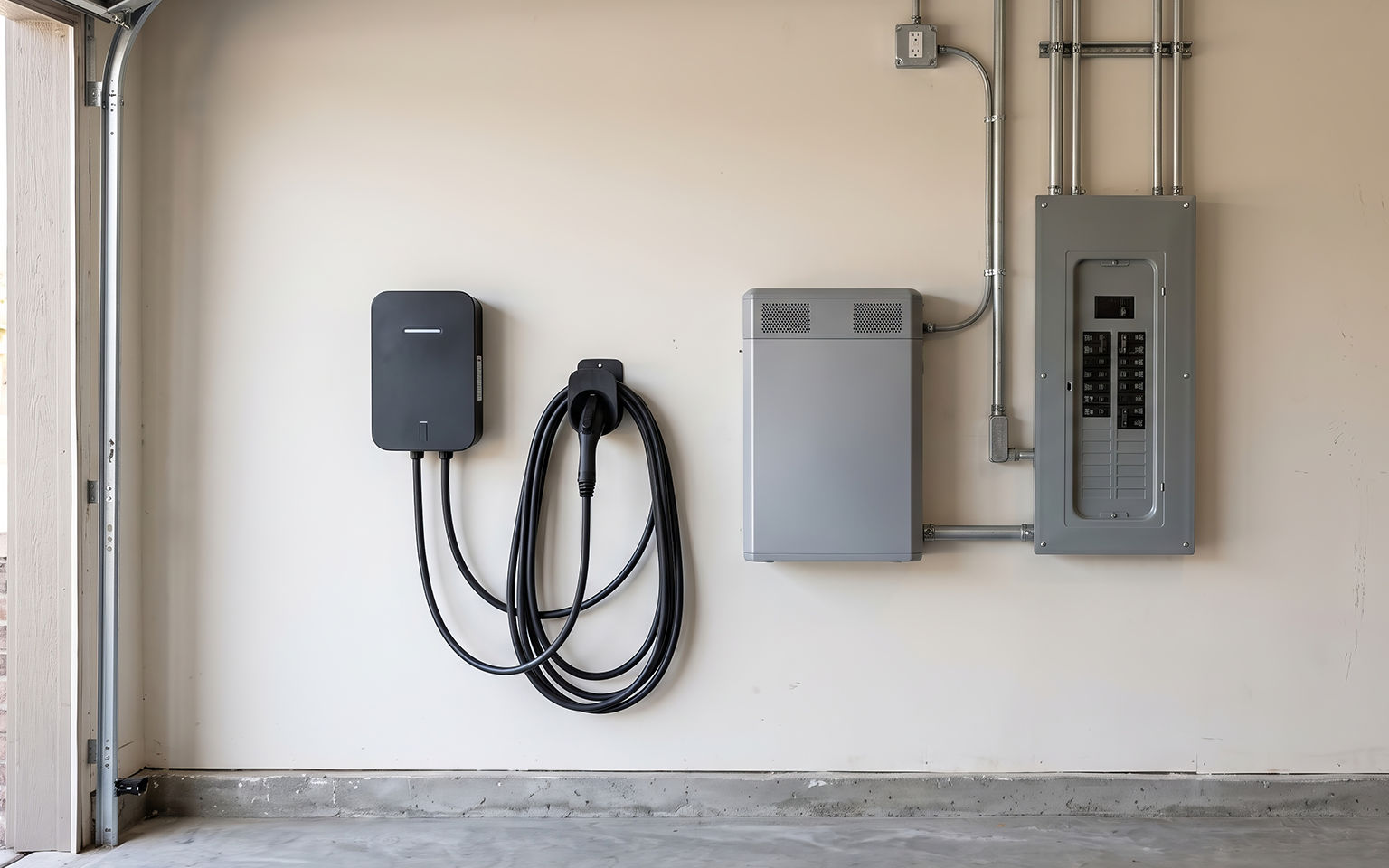
Your home’s electrical panel has a limited amount of capacity available, and a home EV charger adds another electrical load.
Before installation, an electrician can evaluate your panel, existing circuits, and household electrical demand.
Some homes have plenty of available capacity. Others may benefit from a lower charging setting, an approved energy management system, or a panel upgrade.
The goal isn’t automatically to install the biggest charger or upgrade your entire electrical system. It’s to find a safe, practical solution that meets your charging needs.
If your home needs additional electrical capacity, our electrical panel upgrade services can help you prepare for reliable home charging.
What Should You Expect During Home EV Charger Installation?
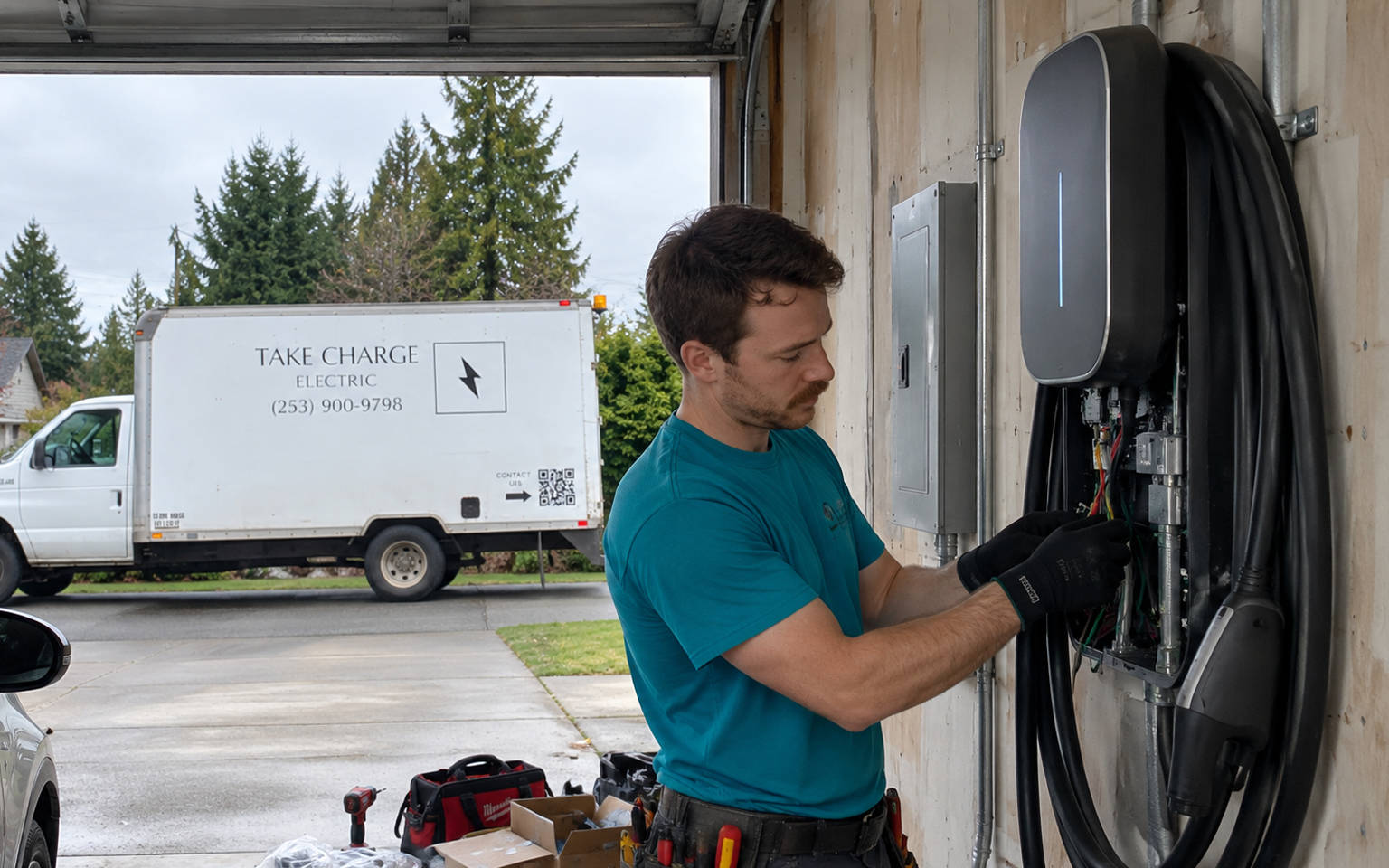
Installing an EV charger involves more than mounting equipment on your garage wall.
We’ll look at where you park, how far the charger will be from your electrical panel, and the best route for the wiring. We’ll also review the charger’s electrical requirements and any permits needed for the installation.
These details affect both installation costs and the amount of work involved.
And if you’re planning to purchase another electric vehicle down the road, that’s worth discussing now. A little forward planning can make future charging needs easier to accommodate.
Ready to Find the Right Home EV Charger?
The best home EV charger is one that works with your vehicle, fits your daily routine, and can be safely supported by your home’s electrical system.
Whether you’re charging a Tesla, Chevrolet, Ford, Rivian, or another electric vehicle, Take Charge Electric can help you understand your options without making the process more complicated than it needs to be.
We provide professional EV charger installation in Gig Harbor and surrounding communities, with friendly guidance and careful attention to electrical safety.
Wondering what installation might cost? Start with our EV charger installation cost estimator to get a better idea of your project. We’ll help you take it from there.

Owner/CEO
Matt built Take Charge Electric with a simple goal: do things the right way and take care of people. He takes pride in building a team that stands behind their work and makes a real impact in the community. Seeing that come to life every day is what drives him.
Follow Us