A backyard shed can be much more than a place to store the lawn mower and a few garden tools. It might be your workshop, home office, art studio, hobby room, or quiet place to escape for a few hours.
No matter how you use it, electricity can make your shed far more comfortable and practical. You may want lights, outlets, heating, power tools, a computer, or a place to charge batteries. However, safely powering a backyard shed requires more than running an extension cord across the yard and hoping for the best.
An extension cord might be helpful for a quick, temporary job. It is not a safe or reliable replacement for properly installed electrical equipment.
Your Shed May Be Outside, but Its Power Needs Are Real
A basic storage shed may only need a light and one or two outlets. A workshop could need enough power to run saws, chargers, a compressor, and other tools. If you are creating a backyard office, you may want electricity for your computer, internet equipment, lighting, heating, and air conditioning.
Those needs can add up quickly.
Before safely powering a backyard shed, it is important to think about how the space will be used now and how that might change later. A shed that starts as a simple workspace could eventually become a more complete office or hobby room.
Planning ahead can help you avoid an electrical setup that feels too limited a year or two from now. It can also make sure the equipment you use in the shed receives the steady, reliable power it needs.
The Problem With Running an Extension Cord From the House
Running an extension cord from the house may seem like the fastest and least expensive solution. You plug it in, stretch it across the yard, and suddenly your shed has power.
Unfortunately, that convenience can come with several risks.
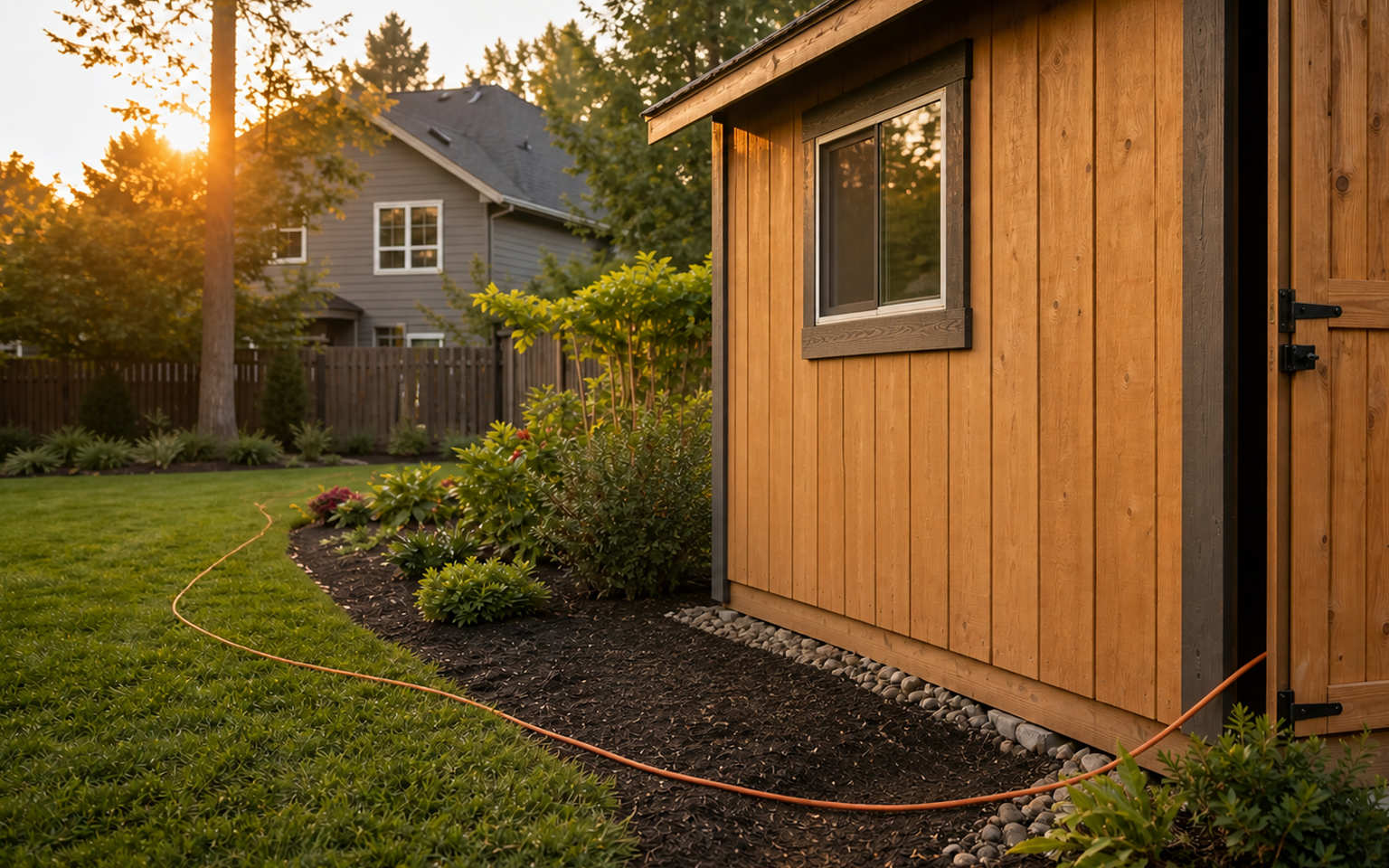
Extension cords are designed for temporary use. When one is used as a permanent power source, it may be exposed to rain, snow, heat, freezing temperatures, animals, lawn equipment, and everyday wear. Even a small crack or damaged area in the cord can create a serious electrical hazard.
A cord running across the yard can also become a tripping hazard. It may be damaged by a lawn mower, pinched in a door, or buried under leaves and forgotten. Running a cord through a window or doorway can damage its outer covering, especially if the cord is squeezed whenever the door or window closes.
The outlet and circuit inside the house can also become overloaded. A circuit that already powers lights, appliances, or other outlets may not be able to safely handle tools, heaters, and other equipment in the shed.
Safely powering a backyard shed means considering the entire electrical load, not only whether your extension cord is long enough to reach.
What Safely Powering a Backyard Shed Actually Requires
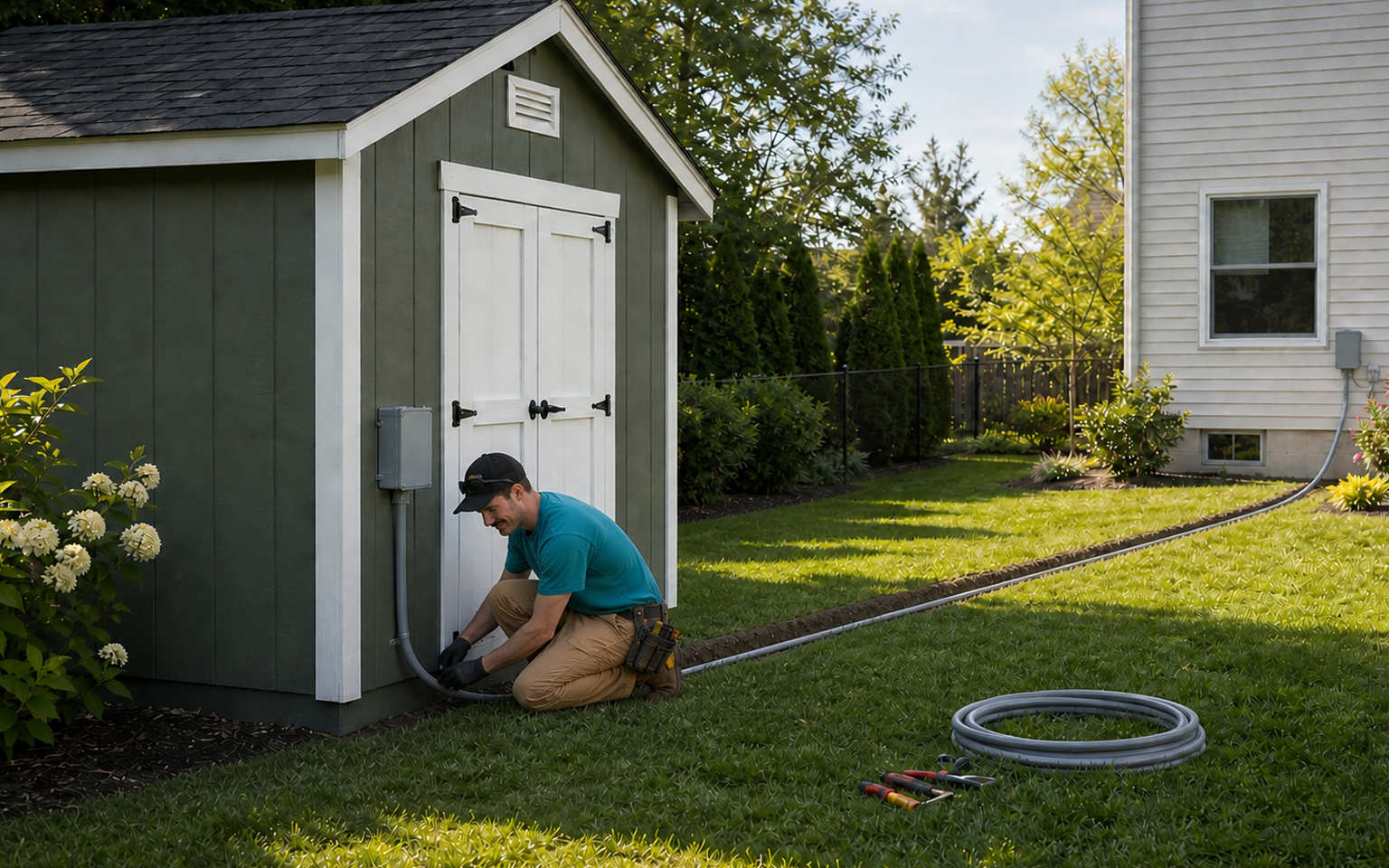
A proper electrical installation gives your shed a safe and dependable source of power. Instead of relying on a cord plugged into the house, the shed receives electricity through equipment designed and installed for that purpose.
The exact setup will depend on where the shed is located, how much power it needs, and what equipment will be used inside. Your home’s existing electrical system also needs to be considered. An electrician can determine whether the panel has enough available capacity or whether other work may be needed first.
The installation may include dedicated circuits, permanent wiring, outlets, switches, lighting, and electrical equipment made for damp or outdoor locations. The power supply must also be properly protected from moisture and accidental electrical shocks.
Because the shed is separate from the house, getting electricity to it may require underground wiring. This wiring needs to be correctly protected and installed at the proper depth. The route should also be planned carefully to avoid other underground services and future yard projects.
There is more involved than simply digging a trench and placing a wire inside it. That is why safely powering a backyard shed should be handled by a qualified electrician.
Match the Electrical Setup to How You Use Your Shed
There is no single electrical setup that works for every backyard shed.
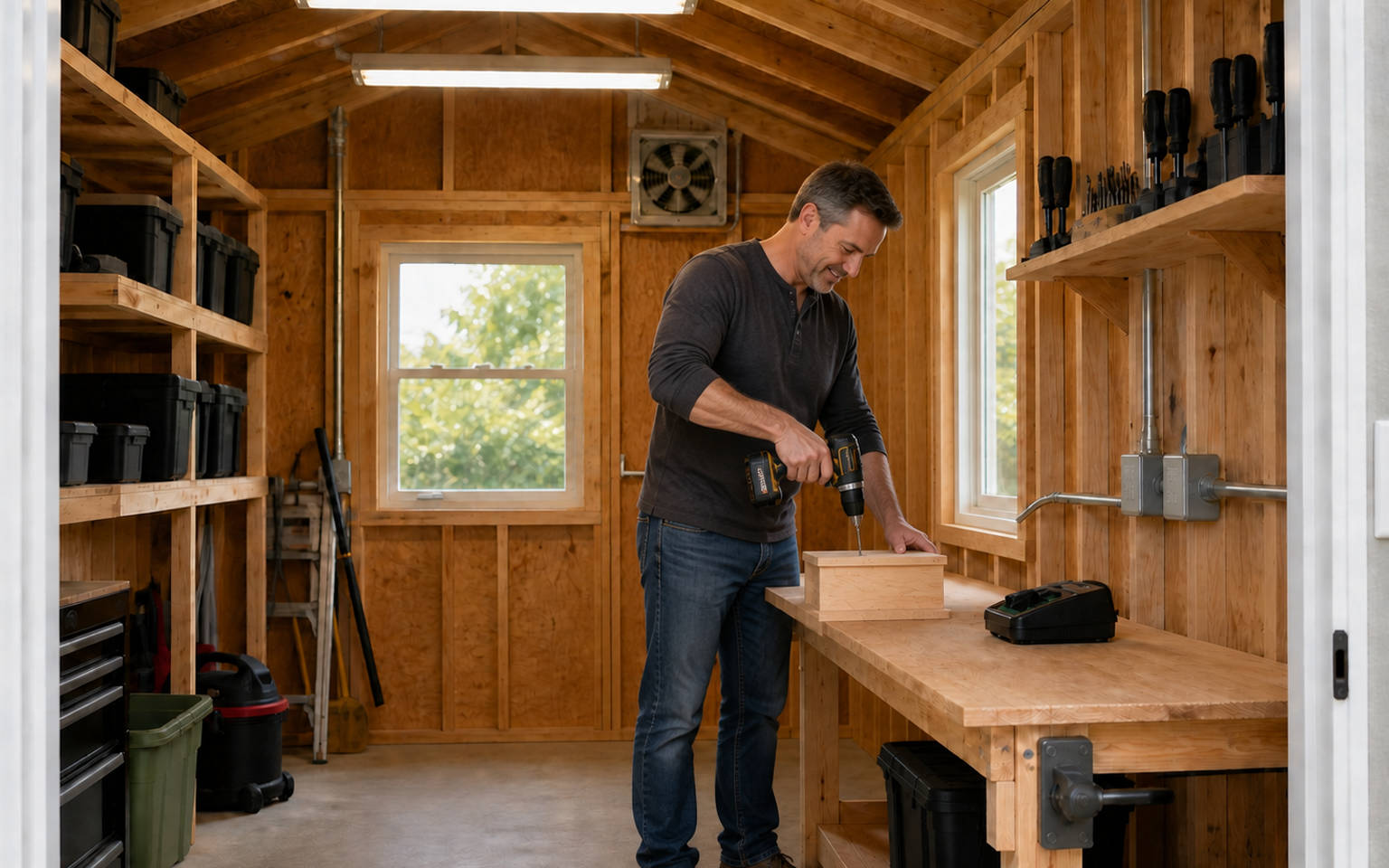
If your shed is used for storage, you may only need good lighting and a few convenient outlets. A workshop could require separate circuits for larger tools and equipment. Some tools need more power than a regular household outlet can provide.
A backyard office has different needs. Computers, monitors, internet equipment, lighting, heating, and cooling should receive dependable power. Flickering lights or a circuit that trips every time the heater turns on can quickly turn your quiet office into a frustrating place to work.
You may also want to consider outdoor lighting, security cameras, battery chargers, or outlets on the outside of the shed. Adding these during the original installation may be easier than trying to fit them in later.
Make a list of everything you expect to plug in, including items you may not use every day. This gives your electrician a better idea of how much power the shed will require.
Reliable Power Makes Your Shed More Useful
Safety is the most important reason to install electricity correctly, but it is not the only benefit.
Proper wiring gives you steady, reliable power without repeatedly plugging in cords, resetting breakers, or choosing which piece of equipment you can use at one time. You can turn on the lights, charge your tools, and use the space as intended.
It can also make the shed more comfortable throughout the year. Depending on how the space is designed and insulated, you may want a safe way to power heating, ventilation, or cooling equipment.
Good lighting can make a major difference, too. A single portable lamp may be enough to find a shovel, but it will not provide the visibility you need for detailed work. Permanently installed lighting can be planned around workbenches, storage areas, entrances, and the way you move through the shed.
Safely powering a backyard shed lets you use the space without wondering whether the cord is getting hot, the circuit is overloaded, or the next rainstorm will cause a problem.
Start With a Safe Electrical Plan
Before buying heaters, installing lights, or setting up your tools, talk to a licensed electrician about what the shed will need.
An electrician can inspect your home’s electrical system, review how you plan to use the space, and recommend an installation that meets current safety requirements. They can also help you plan for future needs, so you are not left with too few outlets or insufficient power.
Take Charge Electric can help you understand your options without making the process confusing. We will look at your home, your shed, and the equipment you want to use. Then we can explain what is needed to bring safe, reliable electricity to the space.
If you are thinking about safely powering a backyard shed, contact Take Charge Electric to schedule an electrical evaluation. A proper installation can protect your home, help prevent electrical fires, and make your shed a safer and more useful part of your property.

Give Your Shed the Power It Needs
Ready to safely power your backyard shed? Take Charge Electric can help you plan and install a dependable electrical setup for your office, workshop, hobby space, or storage shed.

Owner/CEO
Matt built Take Charge Electric with a simple goal: do things the right way and take care of people. He takes pride in building a team that stands behind their work and makes a real impact in the community. Seeing that come to life every day is what drives him.
Follow Us