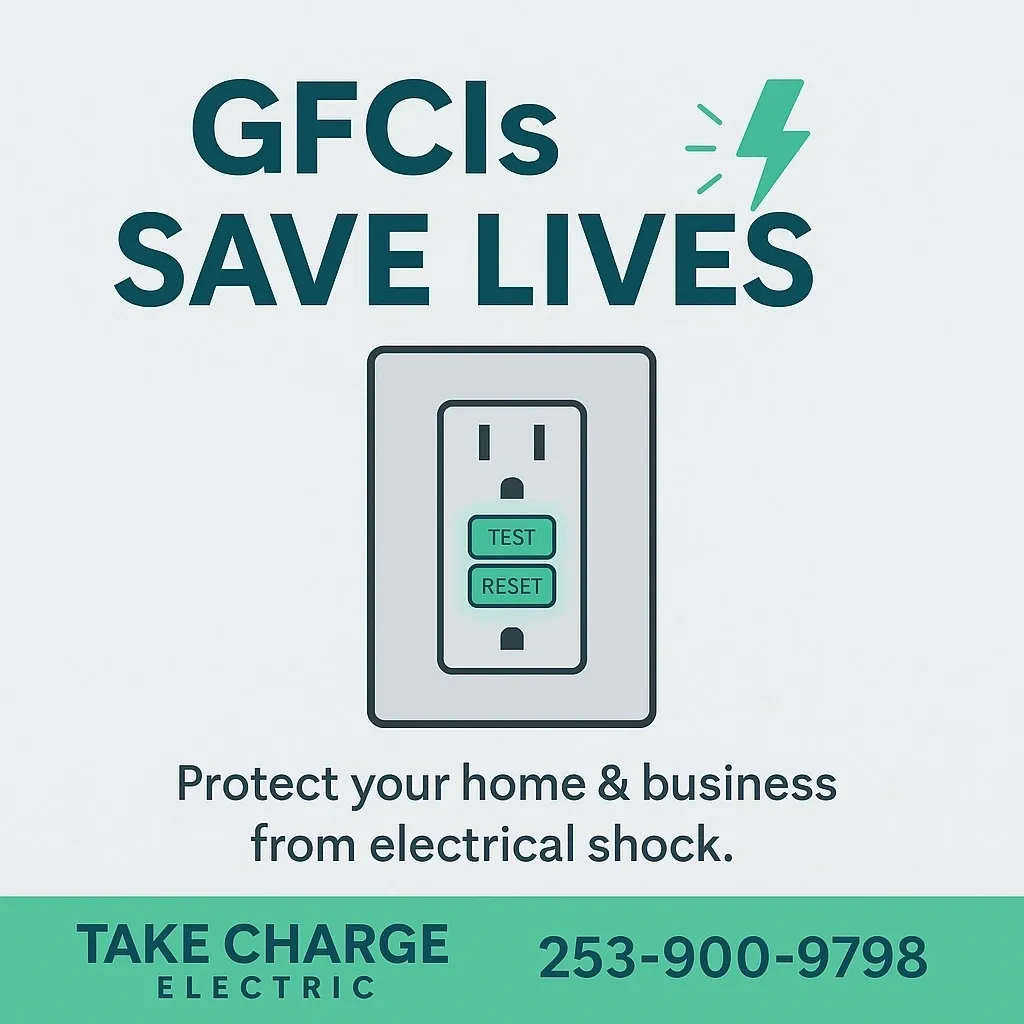
These small but powerful devices can make the difference between safety and disaster.
Electricity powers nearly every aspect of our daily lives, but it can also pose serious risks if not managed safely. One of the most effective devices designed to protect people from electrical hazards is the Ground Fault Circuit Interrupter (GFCI). These devices are now required by code in many areas of a home or business and have saved countless lives by reducing the risk of shock and electrocution.
What is a GFCI?
A GFCI is a protective device that monitors the flow of electricity in a circuit. Under normal conditions, the current flowing into an electrical device should equal the current flowing out. If the GFCI detects even a small imbalance—such as current leaking through a person to the ground—it shuts off the power almost instantly. This quick action can prevent severe injury or death.
Why GFCIs are Important
- Shock Prevention: They provide an extra layer of safety beyond standard circuit breakers.
- Required by Code: The National Electrical Code (NEC) requires GFCIs in areas with a higher risk of moisture, such as kitchens, bathrooms, garages, laundry rooms, basements, and outdoor outlets.
- Peace of Mind: Knowing your electrical system has GFCI protection ensures your family, employees, and property are safer from hidden dangers.
Different Types of GFCIs
1. Receptacle GFCIs
The most common type, often installed in place of standard wall outlets. You’ll recognize them by the “Test” and “Reset” buttons on the face. They protect anything plugged into that outlet and sometimes other outlets downstream on the same circuit.
2. Circuit Breaker GFCIs
Installed directly in the electrical panel, these provide GFCI protection for an entire branch circuit, making them useful for areas where multiple outlets or devices need protection.
3. Portable GFCIs
These are plug-in devices that offer temporary protection and are often used with outdoor equipment, power tools, or in areas where permanent GFCI outlets aren’t available.
4. Self-Testing GFCIs
Modern versions that automatically test themselves to ensure proper function. If they detect an issue, they provide a visual or audible indication that replacement is needed.
5. Audible/Sounding (Alarm) GFCIs
A newer type of GFCI that not only trips when it detects a fault, but also sounds an alarm. This is especially helpful in places like basements, garages, or outdoor locations where a tripped outlet might go unnoticed. The alarm ensures you’re alerted to the problem and can take action quickly.
How to Maintain GFCIs
Like all safety devices, GFCIs should be tested regularly to make sure they’re functioning properly. Manufacturers recommend pressing the “Test” button at least once a month. If the outlet doesn’t trip or reset correctly, it’s time for a replacement.
Keeping Your Home and Business Safe
GFCIs are not just another piece of electrical equipment—they’re lifesaving devices that every property should have installed in the right locations. With multiple types available, including advanced options like self-testing and alarm GFCIs, there’s a solution for every home and business. Making sure they are properly installed, regularly tested, and replaced when needed is one of the simplest but most effective steps you can take toward electrical safety.
At Take Charge Electric, we believe safety should always come first. If you’re unsure whether your home or business has the proper GFCI protection, give us a call. We’ll inspect your system and make sure you have the safeguards in place to keep your family and property safe.
Our Service Area
At Take Charge Electric, we’re proud to serve homeowners and businesses across the Key Peninsula, Gig Harbor, Belfair, Poulsbo, Bremerton, Port Orchard, Tacoma, and the surrounding areas. Whether you need GFCIs installed, a full panel upgrade, or reliable electrical service for a new project, our licensed electricians are here to help. If you’re unsure whether your property has the proper GFCI protection, reach out—we’ll ensure your electrical system is as safe as it should be.
Call (253) 900-9798 or contact us HERE to schedule.

Owner/CEO