You hear scratching in the attic. Maybe you’ve spotted a mouse in the garage or found a few droppings behind some boxes. It’s annoying, sure, but probably not something you’d connect with your home’s electrical system.
Here’s the thing. Mice and rats aren’t particularly picky about what they chew, and electrical wiring is sometimes on the menu.
The problem with mice chewing electrical wires is that the damage can happen completely out of sight. Everything might seem fine until a breaker starts tripping, an outlet stops working, or something smells like it’s getting too hot.
So, can rodents really cause an electrical fire? Unfortunately, yes. Here’s what Gig Harbor homeowners should know and when it’s worth having an electrician take a closer look.
Why Do Mice and Rats Chew Electrical Wires?
Rodents have teeth that never stop growing. Chewing helps keep those teeth worn down, which is why they’ll gnaw on wood, plastic, cardboard, and sometimes the protective coating around electrical wires.
They’re not looking for electricity. They just happen to find wiring along their travels.
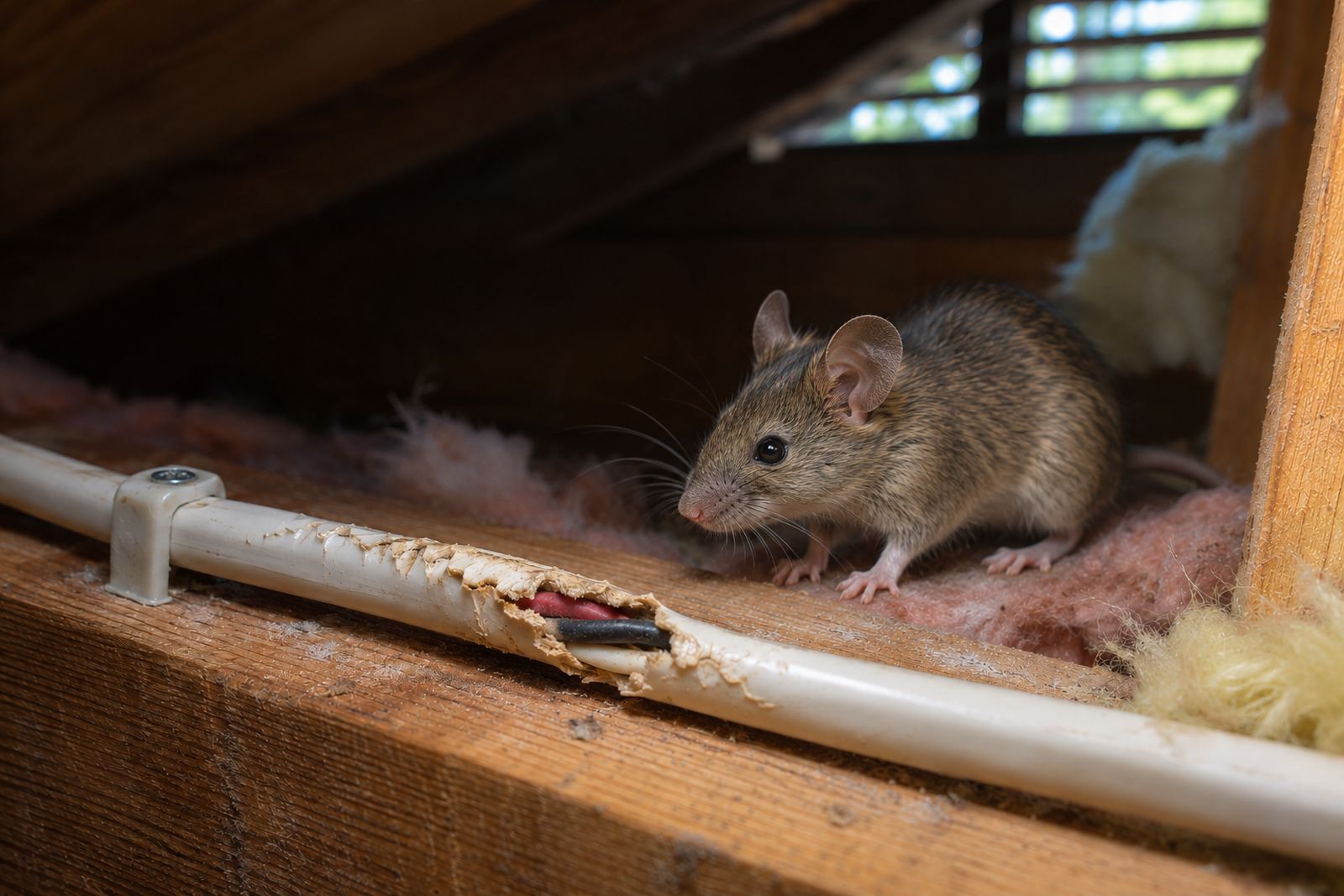
Mice chewing electrical wires can strip away the insulation that keeps electricity safely contained. Once that protective covering is damaged, the wire underneath may become exposed.
And it doesn’t take a huge hole or a family of mice to create a problem. One damaged section of wiring in the wrong place can be enough.

Where Do Rodents Usually Damage Wiring?
Mice and rats prefer quiet, sheltered places where they can move around without being disturbed. Unfortunately, some of their favorite hiding spots also contain electrical wiring.
Attics are a common trouble spot. Rodents can travel along framing, squeeze through openings, and build nests near wiring that runs through the space.
Crawl spaces are another favorite, especially when there are gaps around pipes, vents, or utility connections.
Garages, sheds, and unfinished storage areas can also attract rodents. And because wiring often runs behind walls and ceilings, you might never see the damage they’re causing.
That’s what makes mice chewing electrical wires tricky. You can deal with the rodents you see, but there may still be damaged wiring somewhere you can’t easily inspect.
Warning Signs of Rodent-Damaged Electrical Wiring
You don’t necessarily need to see a chewed wire to suspect something is wrong.
Sometimes the first clue is an electrical problem that seems to come out of nowhere.
Breakers That Keep Tripping
A breaker that trips repeatedly deserves attention. Damaged insulation can allow electrical conductors to contact each other or grounded materials, creating a fault.
Not every tripped breaker means rodents are involved, but if you’ve also noticed signs of mice or rats, it’s worth mentioning when you call.
Flickering Lights or Outlets That Stop Working
Chewed electrical wires can interrupt a circuit or damage connections. That might show up as flickering lights, an outlet that suddenly stops working, or electrical equipment that behaves strangely.
These problems can have several causes, so an inspection is the best way to find out what’s happening.
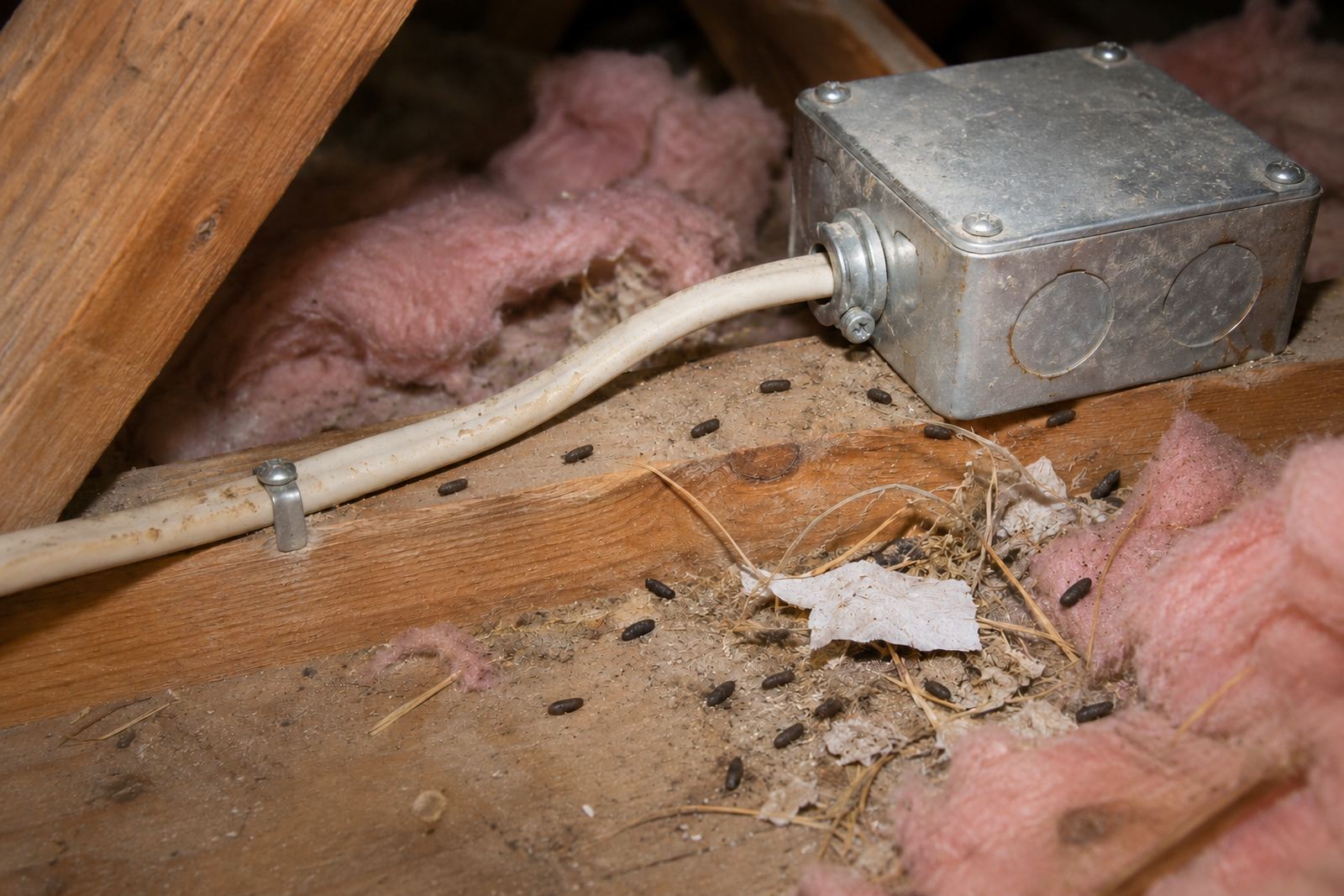
Scratching, Droppings, or Nesting Materials
Hearing movement in the attic doesn’t automatically mean your wiring is damaged.
However, if you’ve found droppings, shredded insulation, or nesting materials near electrical equipment, there’s a good reason to check for trouble.
Burning Smells or Unusual Sounds
A burning smell, buzzing, or crackling near an outlet or electrical equipment is something to take seriously.
These signs can indicate overheating or electrical arcing. Stop using the affected equipment and arrange for an electrician to investigate.
If there’s smoke, visible fire, or active sparking, keep your distance and call 911.
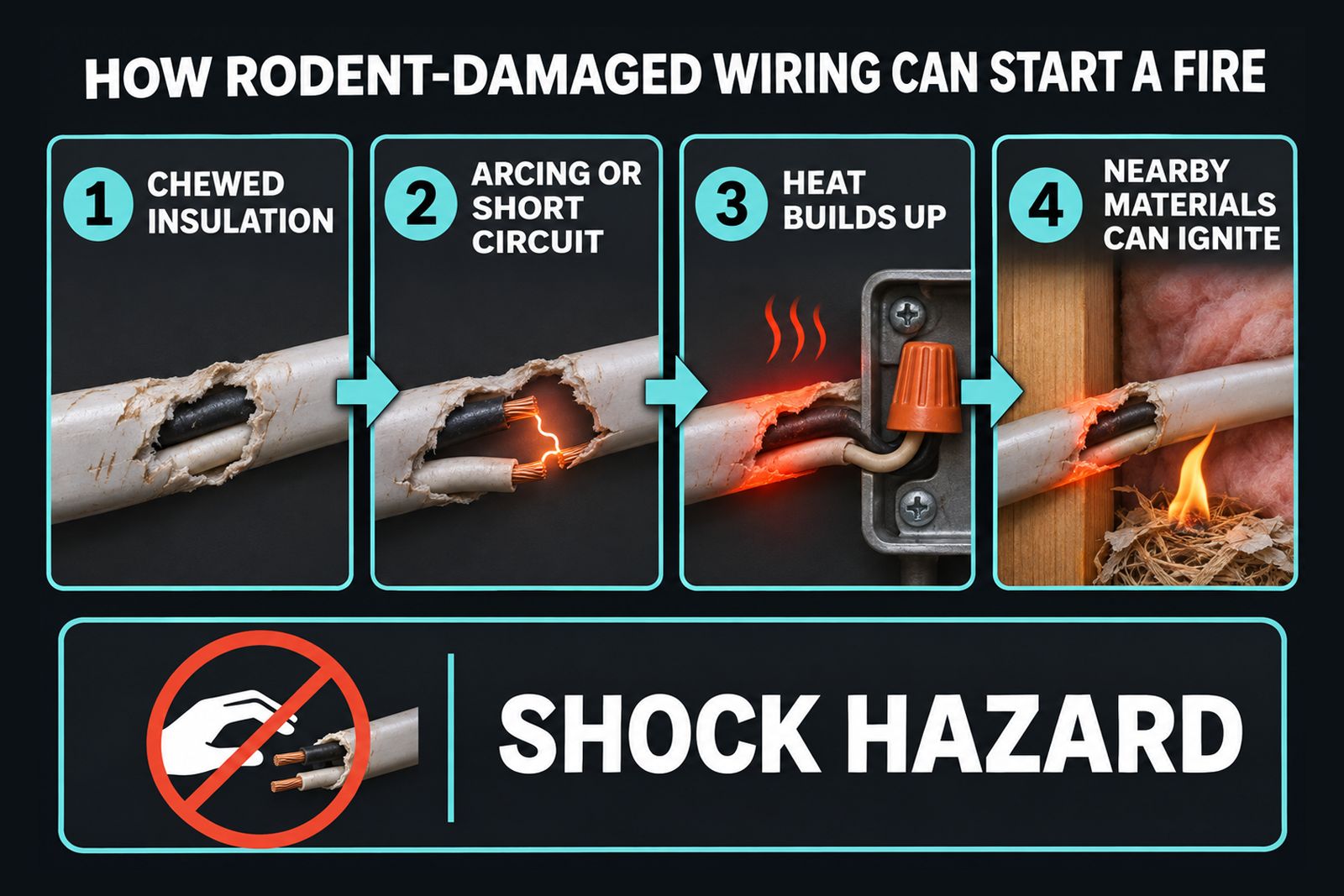
How Can Rodent-Damaged Wiring Cause a Fire?
Electrical wiring has insulation for a reason. It keeps electricity traveling where it’s supposed to go.
When rodents chew through that insulation, they can create conditions for short circuits, arcing, and overheating.
Electrical arcing happens when electricity jumps across an unintended gap. The heat produced can ignite nearby combustible materials, including wood, insulation, and nesting debris.
Exposed wiring can also create a shock hazard for anyone who comes into contact with it.
The University of California’s Integrated Pest Management Program identifies damaged electrical wiring and potential fires among the hazards associated with house mice.
Not every chewed wire will start a fire, but there’s no reliable way to judge the danger just by looking at a small section of damage.
That’s why mice chewing electrical wires should always be taken seriously, even when everything still seems to work.
Found Chewed Electrical Wires? Here’s What to Do
First, don’t touch the damaged wiring, even if it looks harmless. A wire can still be energized when its protective covering is missing.
If you can safely identify the affected circuit, turn it off at the breaker. Otherwise, leave the area alone and contact an electrician.
Avoid covering exposed wiring with electrical tape or attempting a quick repair. The damage may extend beyond the section you can see.
At Take Charge Electric, our residential electrical services include troubleshooting, wiring inspections, and repairs to help identify problems and get your electrical system back into safe working condition.
Does Rodent Damage Mean Your Whole House Needs Rewiring?
Usually, no.
Finding mice chewing electrical wires doesn’t automatically mean you need to replace every wire in your home.
Sometimes the damage is limited to one accessible section of a circuit. Other situations may involve several areas, especially if rodents have been active for a while.
An electrician can inspect the affected wiring, determine how far the damage extends, and recommend appropriate repairs.
If your home also has aging or outdated wiring, it may be worth discussing its overall condition. Our article on whole-house rewiring in older homes explains what electricians look for and when larger electrical updates may make sense.
The goal is to fix what’s actually wrong, not turn a manageable repair into an unnecessary project.
Keeping Rodents Away From Your Wiring
Once the electrical damage has been repaired, you’ll also want to address how the rodents got inside.
A pest control professional can help identify entry points, remove rodents, and recommend ways to prevent them from returning.
Sealing gaps around pipes, vents, and exterior openings can make a difference. Keeping stored materials organized and food sources secured can also help.
It’s a good combination: pest control handles the unwanted visitors, and your electrician makes sure they haven’t left an electrical problem behind.

Let’s Make Sure Your Wiring Is Safe
Nobody wants to discover that a mouse has been using their electrical wiring as a chew toy.
If you’ve noticed rodent activity, damaged wiring, or electrical problems that don’t have an obvious explanation, give Take Charge Electric a call.
We’ll help figure out what’s going on, explain what we find, and walk you through the next steps. No guesswork, no unnecessary repairs, and no pressure.
Call or text (253) 900-9798 to schedule an electrical inspection in Gig Harbor. We’re happy to help you get things sorted out.
Related Electrical Videos

Owner/CEO
Matt built Take Charge Electric with a simple goal: do things the right way and take care of people. He takes pride in building a team that stands behind their work and makes a real impact in the community. Seeing that come to life every day is what drives him.
Follow Us