One of the most common questions we hear from homeowners is:
“What size generator do I actually need?”
Choosing the right size generator isn’t about going as big as possible—it’s about choosing a system that safely and reliably powers what matters most in your home. For Western Washington homeowners, weather patterns, home systems, and lifestyle all play a role in sizing the right generator.
Why Generator Size Matters
A generator that’s too small may overload and shut down when you need it most. A generator that’s too large can be more expensive upfront and cost more to maintain than necessary.
Proper sizing ensures:
- Reliable power during outages
- Safe operation without overloading circuits
- Efficient fuel usage
- Long-term system performance
The goal is balance—enough power to keep your home running without waste.
What Do You Want to Power?
The first step in sizing a generator is deciding what you want backed up during an outage.
Some homeowners choose essential circuits only, while others want whole-home coverage.
Common items homeowners prioritize include:
- Heating systems
- Refrigerators and freezers
- Well pumps or sump pumps
- Lighting and outlets
- Internet and home office equipment
- Medical or mobility devices
Homes in rural or wooded parts of Western Washington often rely heavily on electrical systems like well pumps or septic components, which should always be factored into generator sizing.
Western Washington–Specific Considerations
Generator sizing isn’t one-size-fits-all—especially here.
Local factors that affect sizing include:
- Electric heat or heat pumps
- High moisture environments requiring sump pumps
- Longer outage durations during windstorms
- Work-from-home needs during weekday outages
These realities often mean homeowners need more capacity than they initially expect.
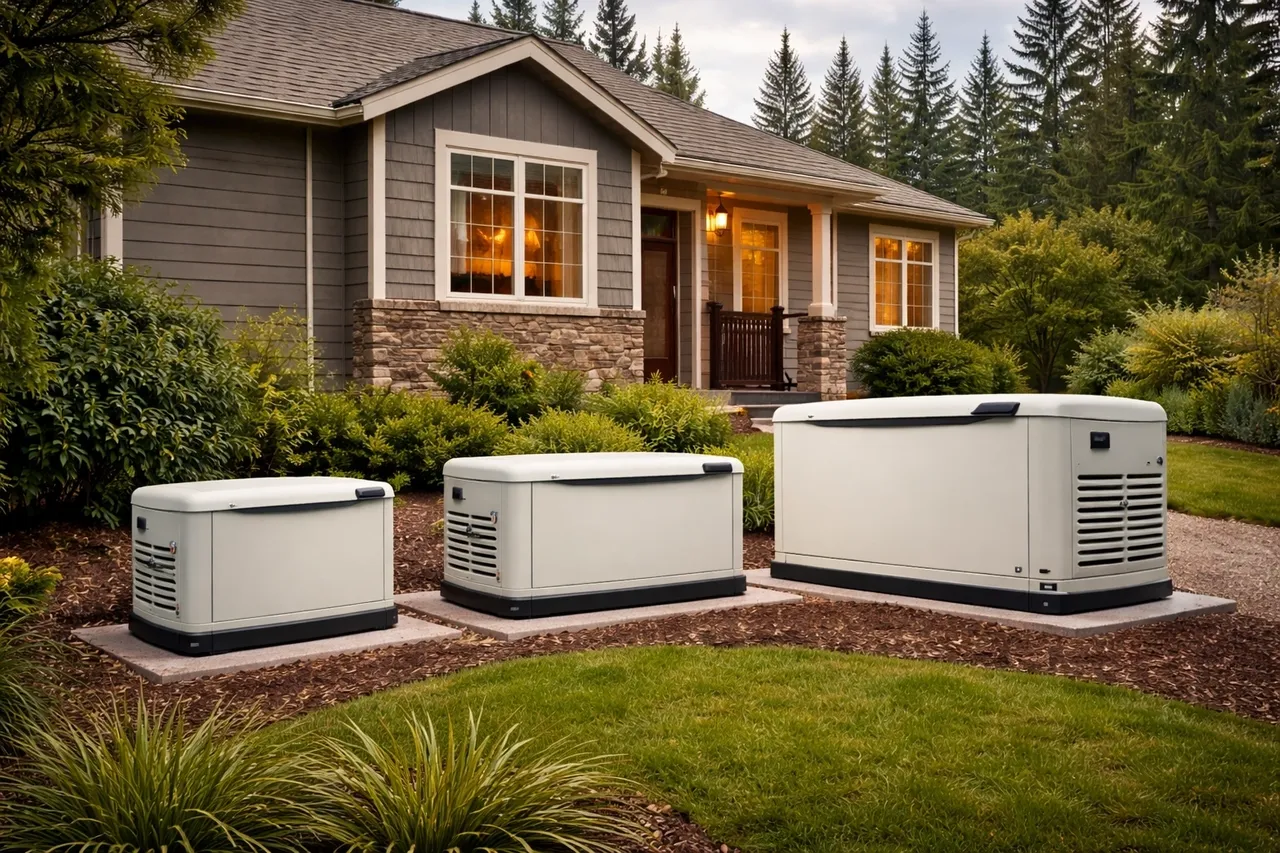
Why “Bigger Isn’t Always Better”
It’s easy to assume a larger generator is safer—but oversizing can lead to:
- Higher installation costs
- Increased fuel consumption
- Less efficient operation
- Unnecessary maintenance expense
A properly sized generator will perform better and cost less over its lifetime than an oversized unit that’s rarely pushed to its optimal load.
How Professionals Determine the Right Size
At Take Charge Electric, generator sizing is based on a detailed electrical load calculation, not guesswork.
This includes:
- Reviewing your electrical panel and service size
- Accounting for startup loads of major appliances
- Evaluating how many circuits or systems you want powered
- Matching generator output to real-world demand
This ensures your generator can handle both normal operation and high-demand startup conditions.
Planning for Today—and Tomorrow
When sizing a generator, it’s also important to think ahead. Future additions like:
- EV chargers
- Hot tubs or saunas
- Home additions or workshops
can impact your electrical needs. Planning for modest growth now can save you from costly upgrades later.
The Bottom Line
Choosing the right generator size is one of the most important decisions in the installation process. The right system keeps your home safe, comfortable, and running smoothly—without overspending or cutting corners.
If you’re considering a generator for your home, a professional evaluation is the best way to ensure you get a system that fits your home, your lifestyle, and Western Washington’s unique conditions.

Owner/CEO